
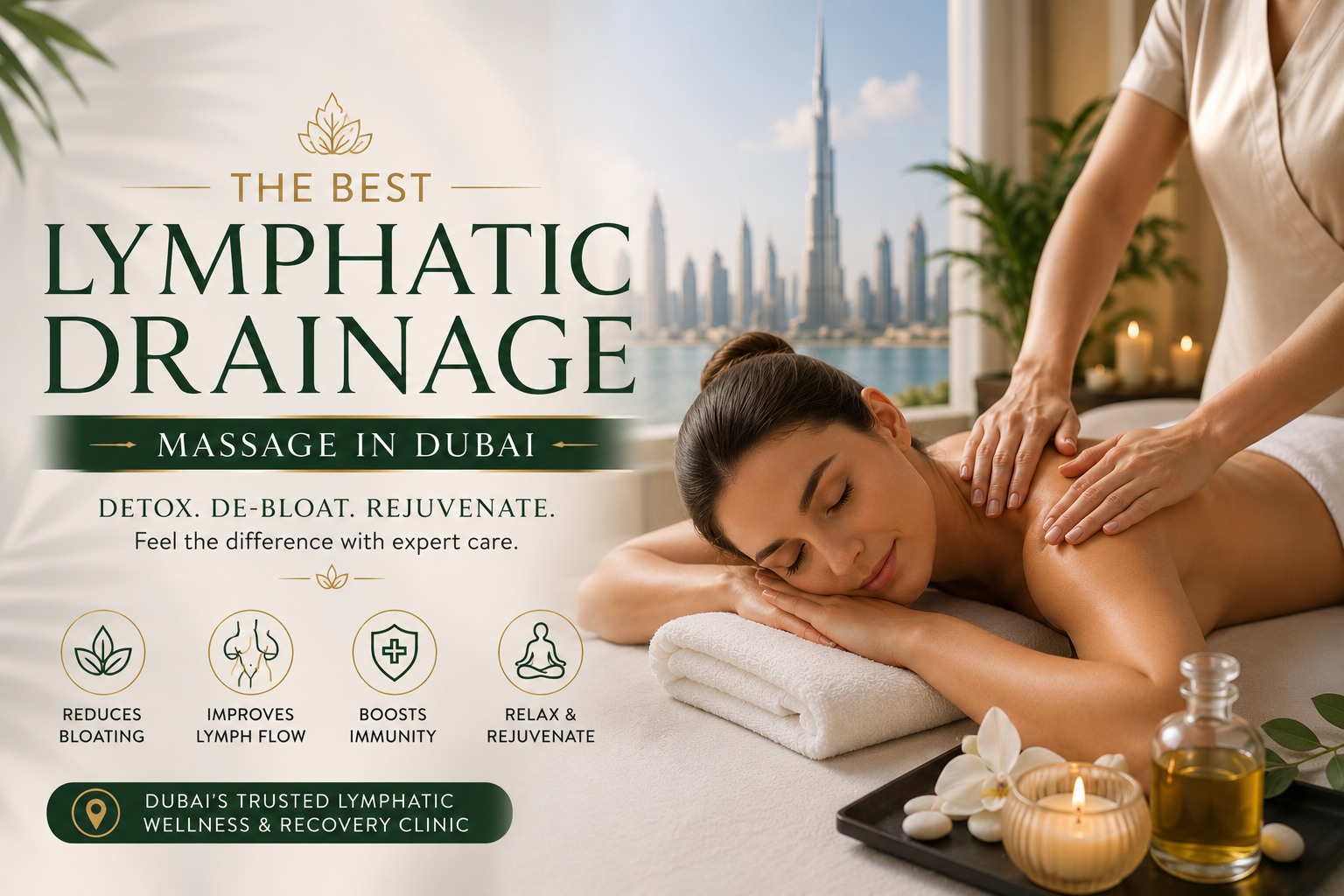
Best Lymphatic Drainage Massage in Dubai: The Lymph & Flow Buyer's Guide
Dubai has no shortage of spas and clinics offering "lymphatic drainage massage." Walk into any wellness directory and you'll find dozens of listings, near-identical menus, and prices that swing from budget to eye-watering — often for what looks like the same 60-minute session. The problem is that lymphatic drainage isn't a one-size-fits-all service. The technique, the therapist's training, and the setting all change what you actually get on the table, and they change your results just as much.
This guide isn't another list of "top benefits." It's a practical walkthrough from the team at Lymph & Flow of what actually separates a well-run lymphatic drainage clinic from one that's coasting on a trendy keyword — so you can book with confidence instead of guesswork.
Why Choosing the Right Clinic Matters More Than You'd Think
Lymphatic drainage massage works on a system that's easy to disturb if handled carelessly. The lymphatic vessels sit just beneath the skin, and moving fluid through them correctly requires a specific rhythm, direction, and pressure. Too much pressure and you're doing deep tissue work that can bruise or irritate; too little structure and you're getting a relaxing rub that never actually reaches the lymph nodes.
This is why the clinic and the therapist matter as much as the technique itself. A qualified practitioner working in a clean, medically aware environment will assess your health history, adapt pressure to your condition, and know when to say no — for example, if you have an active infection or an undiagnosed swelling that needs a doctor first. A rushed technician working off a generic spa script usually won't ask any of those questions. At Lymph & Flow, every session starts with exactly that kind of assessment.
Quick answer: The right clinic matters because lymphatic drainage is a technique-sensitive, health-adjacent treatment — poor technique can be ineffective or uncomfortable, while a qualified therapist adapts pressure and pacing to your body and medical history.
What Is Lymphatic Drainage Massage, Exactly
Lymphatic drainage massage is a gentle, rhythmic manual technique designed to encourage the natural movement of lymph fluid through the body's lymphatic vessels and nodes. Unlike a deep tissue or Swedish massage, it doesn't rely on kneading muscle. Instead, therapists use light, repetitive strokes that follow the direction of lymph flow, helping to move excess fluid toward the nodes where it can be filtered and processed.
The technique originated in European physiotherapy as a treatment for lymphedema, and it's since been adapted into wellness and post-surgical settings worldwide, including manual lymphatic drainage (MLD) protocols and Brazilian-style rhythmic variations. It's this Brazilian-style approach that forms the core of Lymph & Flow's signature treatment menu in Dubai.
Quick answer: Lymphatic drainage massage is a light, rhythmic manual technique that encourages lymph fluid movement toward the lymph nodes, supporting drainage, reduced puffiness, and improved circulation.
Who Actually Needs Lymphatic Drainage Massage
Not everyone booking this treatment has the same goal, and that's part of why clinics need to tailor their approach. People typically seek it out for:
- Post-surgical recovery, particularly after liposuction, tummy tucks, or body contouring procedures
- General swelling or puffiness, especially after travel, long flights, or a high-sodium week
- Water retention linked to hormonal cycles or pregnancy
- Sluggish circulation from a sedentary lifestyle or desk-based work
- Athletic recovery after intense training blocks
- General wellness and detox support as part of a self-care routine
If your goal is medical — for example, post-op fibrosis or a lymphedema diagnosis — you want a clinic experienced in post-operative protocols, not just a spa that added "lymphatic" to its menu. If your goal is general wellness, a Brazilian-style detox and sculpting session, like the one offered through <a href="https://lymphandflow.com/brazilian-lymphatic-drainage">Lymph & Flow's Brazilian Lymphatic Drainage</a>, may be a better fit.
Signs You May Benefit From This Treatment
Quick answer: Common signs include visible puffiness in the face, legs, or abdomen, a feeling of heaviness after sitting or flying, slow bruise recovery, and mild swelling that fluctuates with your cycle or diet.
Some people notice these signs daily; others only after specific triggers like a long flight, a salty meal, or a hormonal shift. If swelling is sudden, one-sided, painful, or accompanied by redness and warmth, that's a signal to see a doctor first — lymphatic massage is a wellness and recovery tool, not a substitute for medical diagnosis.
How Professional Therapists Actually Work
A well-trained lymphatic therapist doesn't just repeat the same sequence on everyone. Sessions typically start with a short consultation covering your goals, any recent surgeries, medications, and areas of concern. From there, the therapist works in a specific order — usually starting near the lymph nodes closest to the neck and collarbone before moving outward to the limbs — because clearing the "drainage pathways" first makes the rest of the session more effective. This is the same structured approach the therapists at Lymph & Flow follow with every client, regardless of whether the goal is recovery or general wellness.
Pressure stays light throughout. If a therapist is pressing hard enough to leave you sore the next day, that's a sign they're either undertrained in the technique or blending it with deep tissue work without telling you.
Manual vs. Machine Techniques: What's the Real Difference
This is one of the most common points of confusion for first-time clients, and it's worth understanding before you book.
Manual lymphatic drainage is performed entirely by hand, using trained, rhythmic strokes calibrated to the direction of lymph flow. It allows the therapist to adjust pressure in real time, respond to areas of tension, and personalize the session as they go. This is the gold-standard approach for post-surgical care and is the technique used in Lymph & Flow's Brazilian-style manual protocols.
Machine-assisted drainage uses tools like vacuum therapy devices, compression sleeves, or vibration plates to stimulate lymph flow mechanically. It can be a useful add-on, particularly for larger surface areas, but it lacks the responsiveness of a trained hand — a machine can't feel where fluid is pooling or adjust pressure the way a therapist can.
Quick answer: Manual lymphatic drainage uses trained hands and adjustable pressure, while machine-assisted methods use mechanical tools; manual technique is generally preferred for post-surgical and medically sensitive cases because of its precision.
Neither is inherently "better" for every situation, but if a clinic only offers machine-based treatment and markets it as equivalent to manual therapy, that's worth questioning. Lymph & Flow is a 100% manual-technique clinic for exactly this reason.
Medical Clinics vs. Luxury Spas: Which Setting Is Right for You
Dubai's lymphatic drainage market roughly splits into two categories, and each serves a different purpose.
Medical or clinical settings are typically staffed by therapists with formal training in post-operative lymphatic care, often working alongside or in referral relationships with surgeons and physiotherapists. These settings are usually the right choice if you're recovering from a procedure, managing fibrosis, or dealing with a diagnosed lymphatic condition.
Luxury wellness spas focus on the detox, sculpting, and relaxation side of lymphatic massage — think Brazilian-style techniques, glow-and-flow combination treatments, and premium in-clinic or at-home experiences. These are a strong fit for general wellness goals: reducing puffiness, supporting circulation, and building a consistent self-care ritual, often in a more comfortable, less clinical atmosphere.
Neither setting is automatically superior — the right one depends entirely on why you're booking. Lymph & Flow sits deliberately in this second category: a luxury-focused clinic with well-trained therapists that comfortably serves general wellness and recovery-support clients who don't need a hospital-adjacent environment but still want technique done properly.
Questions to Ask Before Booking
Before you commit to a package, a short conversation with the clinic can tell you almost everything you need to know. Consider asking:
- What specific training does the therapist have in lymphatic drainage, and is it manual, machine-assisted, or both?
- How many sessions do you typically recommend for my goal?
- What's your protocol for clients who are post-surgery versus general wellness?
- Do you screen for contraindications like infections, blood clots, or certain heart conditions before treatment?
- Is the pressure adjustable in real time if something feels uncomfortable?
- Do you offer home service, and does the same trained therapist come to your location?
A clinic that answers these clearly and without hesitation is generally one that takes the treatment seriously. Vague or rushed answers are a red flag — and it's exactly why Lymph & Flow walks every new client through this before booking.
How to Prepare for Your Session
Quick answer: Hydrate well in the hours before your appointment, avoid a heavy meal right before treatment, skip applying lotion or oil to the treatment area, and arrive with loose, comfortable clothing.
Hydration matters more for lymphatic drainage than most other massage types, since the treatment is specifically working with your body's fluid systems. Drinking water before and after your session supports the process and helps you feel less sluggish afterward. Lymph & Flow therapists cover this same guidance during your pre-session consultation.
What Happens During a Typical Treatment
A session usually opens with a brief consultation, followed by the client lying comfortably while the therapist works in a structured sequence — starting near the neck and collarbone, then moving to the abdomen, legs, or arms depending on your goals. The pressure is light and rhythmic throughout, closer to a gentle sweeping motion than the deep pressure of a Swedish or deep tissue massage. Most sessions run 45 to 75 minutes, and many clients describe the experience as deeply relaxing rather than physically intense.
Afterward, a good therapist will walk you through simple aftercare: hydration, light movement, and what results are realistic to expect over the following days.
How Long Does Recovery and Results Take
Quick answer: Many clients notice reduced puffiness within a few hours of a single session, but visible contouring or lasting reduction in water retention typically develops over a series of four to twelve sessions, depending on your starting point and goal.
Post-surgical clients usually follow a more structured recovery timeline set by their surgeon, often starting a few days after the procedure and continuing weekly for several weeks. General wellness clients have more flexibility and can space sessions based on how their body responds.
How Often Should You Book
For general detox and wellness maintenance, once or twice a month is a common cadence once initial results are established. For active goals — sculpting before an event, managing post-op swelling, or working through stubborn water retention — weekly sessions over a four-to-six-week block tend to produce more noticeable, lasting change. Package pricing, like the multi-session options available through <a href="https://lymphandflow.com/brazilian-lymphatic-drainage">Lymph & Flow's Brazilian Lymphatic Drainage service</a>, is usually structured around this kind of consistent scheduling.
Common Mistakes People Make When Booking
- Choosing purely on price. The cheapest session on a wellness app isn't necessarily performed by a trained therapist, and undertrained hands can make the treatment ineffective or, in rare cases, uncomfortable.
- Skipping the consultation. A clinic that skips health-history questions altogether is skipping an important safety step.
- Expecting a one-session fix. Lasting results, especially for water retention or post-op swelling, usually require a series, not a single visit.
- Confusing it with deep tissue massage. If a session leaves you sore the next day, it likely wasn't performed with true lymphatic technique.
- Not disclosing medical history. Withholding information about recent surgery, medications, or health conditions removes the therapist's ability to adjust the session safely.
Safety Tips Worth Knowing
Always disclose recent surgeries, current medications, pregnancy, or any diagnosed heart, kidney, or circulatory conditions before your session. A responsible clinic will ask, but it's worth volunteering the information regardless. Choose therapists who describe their technique as gentle and rhythmic rather than deep or intense, and don't hesitate to speak up if pressure feels wrong during the session — real-time adjustment is part of proper technique, and it's a standard every Lymph & Flow therapist is trained to follow.
Who Should Avoid This Treatment
Quick answer: People with active infections, untreated blood clots (deep vein thrombosis), certain heart or kidney conditions, or acute inflammation should avoid lymphatic drainage massage until cleared by a doctor.
This isn't a comprehensive medical list, and it's not a substitute for professional advice — if you have a chronic condition or you're unsure whether treatment is appropriate for you, a quick conversation with your doctor before booking is the safest approach. A reputable clinic will support this and won't pressure you to skip that step.
What Results Are Realistic
Lymphatic drainage massage is a wellness and recovery-support treatment, not a medical cure, and any clinic that promises permanent fat loss or guaranteed dramatic transformation from a single session should be approached with caution. Realistic outcomes include reduced puffiness, a lighter feeling, improved circulation, and — over a consistent series of sessions — visible reduction in water-retention-related bloating. Results vary by individual, lifestyle, hydration, and consistency of sessions. Lymph & Flow is upfront about this with every client during the initial consultation.
What Affects Pricing
Session length, therapist experience, whether the treatment is manual or machine-assisted, in-clinic versus home service, and whether you book a single session or a package all affect price. Home service typically carries an additional fee to cover travel, while multi-session packages usually offer meaningful per-session savings over booking individually — a structure you'll see reflected in Lymph & Flow's own pricing tiers.
How to Maintain Results Between Sessions
Staying hydrated is the single most impactful habit between appointments, since the lymphatic system relies on adequate fluid intake to function well. Gentle movement — walking, stretching, or light yoga — also supports circulation and lymph flow. Reducing high-sodium foods in the days following a session can help extend the reduction in puffiness, and some clients find dry brushing or compression garments useful additions, particularly post-surgery, when recommended by their therapist.
Choosing the Right Clinic in Dubai: A Final Checklist
Before booking anywhere, run through this short list:
- Does the therapist have documented training in manual lymphatic drainage?
- Does the clinic ask about your health history before treatment?
- Can they explain the difference between manual and machine-assisted technique?
- Do they offer a session structure matched to your specific goal (post-op, wellness, sculpting)?
- Are pricing and package options transparent upfront?
- Do they offer both in-clinic and home service if you need flexibility?
Clinics that check every box tend to be the ones with consistent, repeat clients rather than one-off bookings driven by a discount code — and it's the standard Lymph & Flow was built around.
Final Thoughts
The best lymphatic drainage massage in Dubai isn't the one with the flashiest ad or the lowest price — it's the one staffed by therapists who understand the technique, ask the right questions, and adapt treatment to your body and your goal. Whether you're recovering from surgery, managing water retention, or simply building a consistent wellness ritual, taking the time to vet a clinic properly makes the difference between a forgettable rub and a treatment that actually delivers.
If you're ready to experience a properly trained, Brazilian-technique lymphatic drainage session in Dubai, you can <a href="https://lymphandflow.com/">learn more about Lymph & Flow</a>, read about the team's approach on the <a href="https://lymphandflow.com/about">Lymph & Flow About page</a>, or <a href="https://lymphandflow.com/contact">contact Lymph & Flow to book a consultation</a> and find the right treatment plan for your goals.
Frequently Asked Questions
How do I know if a therapist is properly qualified in lymphatic drainage? Ask directly about their training — look for certification in manual lymphatic drainage (MLD) specifically, not just a general massage license. A qualified therapist should be able to explain their technique and training background without hesitation.
Is every lymphatic drainage massage the same? No. Technique varies significantly between manual, machine-assisted, European, and Brazilian-style methods, and therapist skill level affects results as much as the method itself.
Should I choose manual therapy over machine therapy? Manual therapy generally offers more precision and real-time pressure adjustment, making it the preferred choice for post-surgical and medically sensitive cases. Machine-assisted methods can work well as a wellness-focused add-on.
Can I exercise after a lymphatic drainage session? Light movement like walking is usually fine and can even support lymph flow, but avoid intense exercise for at least a few hours, especially after a post-surgical session — always follow your therapist's specific guidance.
Does hydration really affect results? Yes. The lymphatic system relies on adequate fluid levels to function properly, so drinking water before and after your session supports the treatment's effectiveness.
How soon after surgery can I start lymphatic drainage massage? This depends entirely on your surgeon's guidance and the type of procedure. Many post-op protocols begin within the first week, but timing should always be confirmed with your surgeon first.
Can older adults benefit from lymphatic drainage massage? Yes, as long as there are no contraindicating health conditions. Many older clients use it to support circulation and reduce general swelling, though a health screening beforehand is especially important.
How do I choose a reputable clinic in Dubai? Look for transparent pricing, therapist qualifications, a proper health-history consultation, and clear communication about what results are realistic for your goal — the same standard Lymph & Flow holds itself to.
What certifications should a lymphatic drainage therapist have? Look for specific manual lymphatic drainage (MLD) certification or training, ideally with additional post-operative care experience if you're recovering from a procedure.
Can lymphatic drainage massage be combined with other wellness treatments? Yes, it's commonly paired with sculpting or contouring massage and detox-focused rituals, though pairing should be guided by a therapist familiar with your goals and history.
Is lymphatic drainage massage painful? It shouldn't be. Proper technique uses light, rhythmic pressure. Noticeable soreness afterward usually indicates the session was performed with too much pressure or blended with deep tissue technique.
How many sessions will I need to see results? Many clients notice reduced puffiness after a single session, but a series of four to twelve sessions is typically recommended for more lasting results, depending on your goal.
Is lymphatic drainage massage safe during pregnancy? Certain forms can be pregnancy-safe, but this always requires a therapist trained in prenatal protocols and, ideally, clearance from your doctor first.
What's the difference between a medical clinic and a spa offering this treatment? Medical or clinical settings typically focus on post-operative and condition-specific care, while wellness spas focus on general detox, sculpting, and relaxation goals — the right choice depends on your reason for booking.
Does insurance cover lymphatic drainage massage in Dubai? Coverage varies and is uncommon for wellness-focused sessions; post-surgical lymphatic care may occasionally be covered depending on your provider and the reason for treatment, so it's worth checking directly with your insurer.
Can lymphatic drainage help with water retention from hormonal changes? Many clients use it for this purpose, and it can support temporary reduction in bloating linked to hormonal fluctuations, though individual results vary.
What should I wear to my appointment? Loose, comfortable clothing is best. You'll typically be asked to undress to your comfort level for the treatment area, similar to a standard massage appointment.
Is home service as effective as an in-clinic session? Yes, provided the same trained therapist and technique are used — the treatment itself doesn't depend on location, only on skill and proper setup. Lymph & Flow offers both in-clinic and home service across Dubai.
How do I maintain results between sessions? Stay well-hydrated, keep moving with light activity, and moderate high-sodium foods in the days following your appointment to help extend the reduction in puffiness.
What's a realistic first step if I'm new to lymphatic drainage massage? Start with a single session to see how your body responds, ask plenty of questions during your consultation, and use that experience to decide whether a package suits your goals. Booking a first session with Lymph & Flow is a good way to experience the manual technique before committing to a package.