
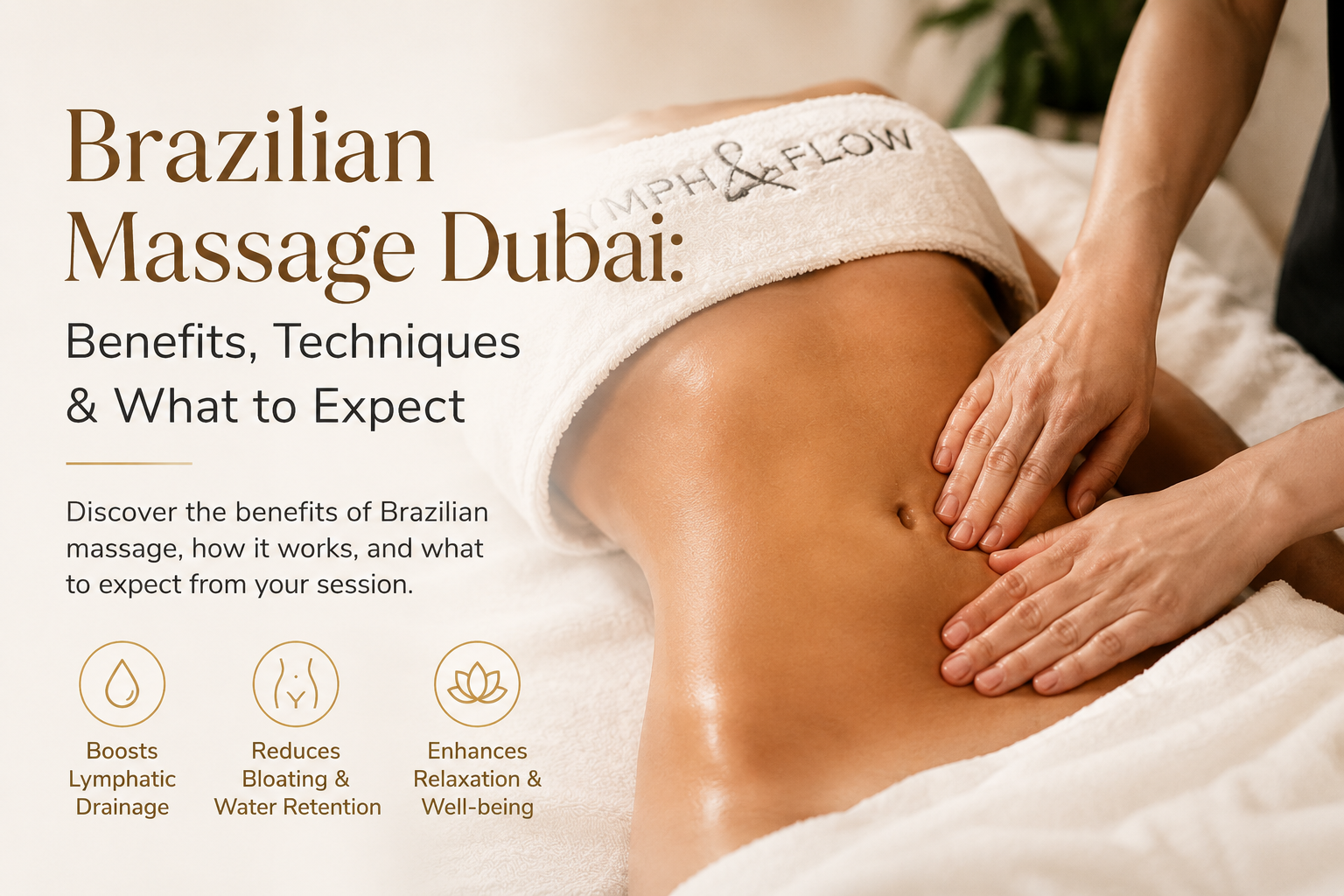
Brazilian Massage Dubai: Benefits, Techniques, What to Expect & How It Compares to Brazilian Lymphatic Drainage
Dubai's wellness scene has grown into one of the most diverse in the world, and Brazilian massage has quietly become one of its most requested treatments. Between the city's fast pace, its year-round heat, and a population that travels constantly for work and leisure, it's no surprise that residents and visitors alike are looking for ways to unwind, recover, and feel more comfortable in their bodies.
If you've searched for "Brazilian massage Dubai," you've probably noticed the term gets used in a few different ways. Some clinics use it to describe a firm, sculpting-style body massage. Others use it almost interchangeably with Brazilian lymphatic drainage, a gentler technique with a different purpose altogether. That overlap can make it genuinely confusing to know what you're booking — and what to actually expect once you're on the table.
This guide breaks it all down in plain language. You'll learn what Brazilian massage is, the techniques involved, who tends to benefit from it, what a typical session looks like, and — importantly — how it differs from Brazilian lymphatic drainage. By the end, you'll have a clear sense of which approach fits your goals, whether that's relaxation, muscle relief, post-travel recovery, or lymphatic wellness support.
Quick Answer: What Is Brazilian Massage?
- Brazilian massage is a firm, rhythmic body massage that blends deep tissue techniques, kneading, and sculpting-style movements
- It's typically used for relaxation, muscle tension relief, and supporting a toned, comfortable feeling in the body
- It is not a medical or fat-reduction treatment — it's a wellness-focused massage
- It differs from Brazilian lymphatic drainage, which uses lighter, rhythmic strokes designed to support fluid movement rather than deep muscle work
- Sessions in Dubai typically run 60–90 minutes and are performed by trained massage therapists
What Is Brazilian Massage?
Brazilian massage draws on techniques rooted in Brazil's broader body-care and spa traditions, where massage is often combined with an emphasis on skin tone, muscle comfort, and overall body confidence. It's not one single fixed technique so much as a style — one that blends elements of deep tissue massage, kneading, and firmer sculpting-style strokes.
The core goals of a typical Brazilian massage session include:
- Releasing tension in major muscle groups
- Supporting a smoother, more toned feel to the skin and underlying tissue
- Encouraging relaxation through rhythmic, structured movement
- Promoting a general sense of physical comfort and wellbeing
In wellness settings, therapists usually combine moderate-to-firm pressure with longer gliding strokes, working across the back, thighs, abdomen, and arms. The pace tends to be more energetic than a traditional relaxation massage, though the exact pressure is always adjusted to the client's comfort level.
It's worth being upfront here: Brazilian massage is a wellness treatment, not a medical procedure. It isn't designed to treat any diagnosed condition, and any clinic that promises fat loss, permanent body reshaping, or medical-grade results isn't giving you accurate information. What it can offer is a structured, professional way to relax tense muscles and support how your body feels day to day.
Why Is Brazilian Massage Popular in Dubai?
Dubai's wellness culture has matured quickly over the past decade, and a few factors explain why treatments like Brazilian massage have found such a strong audience here.
A demanding pace of life. Many residents work long hours across finance, hospitality, tech, and trade — industries where physical tension builds up in the shoulders, neck, and lower back. A structured massage routine offers a practical way to manage that.
A hub for frequent travelers. Dubai's airport connects millions of transit passengers each year, and long-haul flights are simply part of life for many residents. Sitting for extended periods can leave the body feeling stiff and heavy, which is part of why recovery-focused massage has grown in popularity.
A well-established luxury wellness industry. Dubai is home to a dense concentration of spas, wellness clinics, and specialist therapists, many trained in international techniques. That accessibility has made it easier for people to try treatments they might not have encountered elsewhere.
A growing preventive mindset. Rather than waiting until stress or tension becomes a real problem, many residents now treat massage as a regular part of self-care — similar to how they'd approach fitness or sleep habits.
Put together, it makes sense that a technique like Brazilian massage, known for its structured, energizing approach, has found a natural home in the city.
How Does Brazilian Massage Work?
A Brazilian massage session generally follows a structured rhythm, though the specifics vary by clinic and therapist.
Pressure levels. Most sessions use moderate to firm pressure — noticeably more intense than a gentle relaxation massage, but still adjusted based on client feedback. Therapists typically check in throughout the session to make sure pressure stays comfortable.
Target areas. Common focus areas include the back, glutes, thighs, arms, and abdomen — regions where tension and tightness tend to accumulate from sitting, exercise, or daily stress.
Techniques used. Sessions often combine:
- Kneading and compression to work through muscle tightness
- Long gliding strokes to warm up tissue and encourage circulation
- Rhythmic tapping or percussion in some variations
- Firmer sculpting-style movements along larger muscle groups
Session structure. A typical appointment starts with a short consultation, moves into the massage itself (usually 60–90 minutes), and ends with a few minutes of aftercare guidance, often including hydration recommendations.
Professional approach. A qualified therapist will always ask about any injuries, medical conditions, or areas of sensitivity before starting, and will adjust technique accordingly.
Brazilian Massage vs Brazilian Lymphatic Drainage
This is where most of the confusion comes from, since both treatments share the word "Brazilian" and are sometimes offered at the same clinics. But they're built around different goals and different techniques.
| Feature | Brazilian Massage | Brazilian Lymphatic Drainage |
|---|---|---|
| Purpose | Muscle relaxation, tension relief, general wellness | Supporting healthy fluid movement and lymphatic circulation |
| Pressure | Moderate to firm | Light, gentle, rhythmic |
| Primary Technique | Kneading, deep tissue sculpting strokes | Slow, directional strokes following the lymphatic pathways |
| Typical Audience | Those seeking muscle relief or relaxation | Those seeking fluid balance support, post-travel recovery, or post- procedure comfort |
| Session Feel | Energetic, firmer,more physically active | Calm, slow, gentle |
| Recovery Focus | Muscle recovery after activity or long periods of sitting | Supporting the body's natural fluid drainage processes |
| Common Use Cases | Stress relief, tension relief, general body wellness | Mild fluid retention, post-travel puffiness, post-procedure support (with medical clearance) |
The key distinction is pressure and intent. Brazilian massage works through and on the muscles. Brazilian lymphatic drainage works with the body's lymphatic system, using light, specific strokes that follow lymphatic pathways rather than muscle fibers. Neither is "better" — they simply serve different purposes, and many people benefit from understanding which one matches what they're actually looking for.
If your main goal is muscle tension relief and relaxation, Brazilian massage is likely the better fit. If you're more interested in supporting fluid balance — for example, after a long flight, or as part of a broader wellness routine — Brazilian lymphatic drainage may be worth exploring instead.
Top Benefits of Brazilian Massage
Promotes Relaxation
The rhythmic, structured nature of Brazilian massage encourages the nervous system to shift out of a stressed state, which many clients describe as deeply relaxing — even though the pressure itself is firmer than a typical spa massage.
Supports Healthy Circulation
The kneading and gliding techniques used in Brazilian massage can support blood flow to worked muscle groups, which is part of why many people feel warm and refreshed after a session.
Helps Reduce Muscle Tension
Firm, targeted pressure applied to tight areas — like the shoulders, lower back, and thighs — can help ease the day-to-day tension that builds up from sitting, exercise, or stress.
Encourages Stress Relief
Beyond the physical benefits, dedicating time to a massage session gives the mind a break from constant screen time and mental load, which many clients find just as valuable as the physical effects.
May Improve Mobility
Working through tight muscle groups can leave the body feeling looser, which some clients notice as easier movement in the days following a session. This isn't a guaranteed or medical outcome, but it's a commonly reported experience.
Supports Recovery After Travel
Long flights and extended periods of sitting can leave muscles stiff. A structured massage session can help the body feel more mobile and comfortable afterward.
Enhances Overall Wellness
Regular massage, as part of a broader self-care routine, is often associated with better stress management and a stronger sense of physical wellbeing.
Complements Active Lifestyles
Athletes and fitness enthusiasts sometimes use Brazilian massage as part of their recovery routine between training sessions, alongside proper rest and hydration.
Supports Healthy Body Awareness
Regular massage can help people become more attuned to where they hold tension, which can be useful information for adjusting posture, workouts, or daily habits.
Encourages Self-Care
Simply setting aside time for a wellness treatment supports a healthier relationship with rest and recovery — something that's easy to deprioritize in a busy city like Dubai.
Who May Benefit From Brazilian Massage?
- Office workers dealing with shoulder, neck, and lower back tightness from long hours at a desk
- Athletes and fitness enthusiasts looking for a structured recovery routine between training sessions
- Frequent travelers wanting to ease stiffness after long-haul flights
- Busy professionals managing high stress levels who want a dedicated relaxation routine
- Wellness enthusiasts already incorporating massage into a broader self-care practice
- Anyone seeking relaxation without a specific medical goal in mind
Brazilian massage isn't recommended as a substitute for medical treatment, and it isn't designed to address a diagnosed health condition. If you have a specific health concern, it's always best to speak with a doctor first.
What to Expect During a Brazilian Massage Session
Consultation. Your therapist will typically ask a few questions about your health history, any areas of tension or sensitivity, and what you're hoping to get out of the session.
Massage techniques. Expect a combination of kneading, gliding strokes, and firmer sculpting-style movements, generally working from larger muscle groups outward.
Duration. Most sessions run between 60 and 90 minutes, though shorter or longer options are sometimes available depending on the clinic.
Comfort. Pressure is adjusted throughout based on your feedback. Don't hesitate to speak up if something feels too intense — a good therapist will always want that feedback.
Aftercare. After your session, therapists commonly recommend drinking water, resting for a bit if possible, and avoiding intense exercise for the rest of the day.
Hydration. Staying well-hydrated before and after a massage is generally recommended to support how your body feels post-treatment.
Professional advice. If your therapist notices anything unusual, such as unexplained swelling or discomfort, they should recommend you follow up with a medical professional rather than attempting to treat it themselves.
Is Brazilian Massage Safe?
For most healthy adults, Brazilian massage performed by a trained, qualified therapist is considered a safe wellness treatment. That said, a few points are worth keeping in mind.
Because it uses firmer pressure than a standard relaxation massage, it may not be suitable for everyone. People with certain circulatory conditions, recent injuries, skin conditions, or who are pregnant should consult a doctor before booking, and should always inform their therapist of any relevant medical history.
A qualified therapist will ask about contraindications before starting and will adjust — or decline — treatment if there's a reason to be cautious. If you're ever unsure whether Brazilian massage is appropriate for your situation, checking with your doctor first is always the safer choice.
Choosing the Right Brazilian Massage Clinic in Dubai
Dubai has no shortage of spas and wellness clinics, which makes it worth knowing what separates a well-run clinic from one that's cutting corners.
Therapist qualifications. Look for clinics that are transparent about their therapists' training and certifications. A reputable clinic won't hesitate to share this information.
Hygiene standards. Clean, well-maintained treatment rooms and properly sanitized equipment are non-negotiable basics for any professional wellness clinic.
Personalized treatment plans. A good clinic will ask about your goals and health history rather than offering a one-size-fits-all session.
Client experience. Reviews and testimonials can offer a useful window into how a clinic actually operates, beyond what's promised on their website.
Professional consultation. Clinics that take the time to explain what a treatment can — and can't — do for you are generally more trustworthy than those that lean on exaggerated claims.
Why Consider Brazilian Lymphatic Drainage?
If your main goal isn't muscle tension but rather supporting your body's natural fluid balance — say, after a long-haul flight, during a period of mild fluid retention, or as part of post-procedure recovery support with medical clearance — Brazilian lymphatic drainage may be a more suitable option than a traditional Brazilian massage.
This technique uses light, rhythmic strokes specifically designed to work with the lymphatic system rather than the muscles. It's a gentler experience overall, and it's built around a different physiological goal: supporting fluid movement rather than releasing muscle tension.
For readers who want to understand this technique in more depth — including how it works, who it's typically suited for, and what a session involves — Lymph & Flow's Brazilian Lymphatic Drainage service offers a dedicated, specialist approach to this type of treatment in Dubai. Their therapists focus specifically on lymphatic wellness support, which makes them a relevant option if that's the outcome you're looking for rather than a traditional muscle-focused massage.
Expert Wellness Recommendations
Whichever type of massage you choose, a few habits can help you get more out of the experience:
- Stay hydrated before and after your session to support how your body responds to treatment
- Prioritize sleep in the days around your appointment, since rest plays a major role in recovery
- Manage stress levels through a consistent routine, not just occasional massage sessions
- Move regularly, even with light stretching, to complement the effects of massage
- Follow your therapist's aftercare guidance, especially around hydration and activity levels
- Communicate openly with your therapist about pressure, sensitivity, and any health concerns
Key Takeaways
- Brazilian massage is a firm, structured wellness massage focused on muscle relaxation and tension relief
- It is not the same as Brazilian lymphatic drainage, which uses lighter strokes to support fluid movement
- Sessions typically last 60–90 minutes and are performed by trained massage therapists
- It's a wellness treatment, not a medical procedure — approach any claims of fat loss or medical results with caution
- Choosing between Brazilian massage and Brazilian lymphatic drainage depends on your specific goals
- Always disclose relevant health history to your therapist before booking
Conclusion
Brazilian massage and Brazilian lymphatic drainage may share a name, but they're built for different purposes. Brazilian massage is a firmer, muscle-focused treatment designed around relaxation and tension relief — a solid choice if you're dealing with tight shoulders, a stiff back, or general stress. Brazilian lymphatic drainage, on the other hand, is a gentler technique aimed at supporting the body's fluid balance, making it a better fit for post-travel recovery or general lymphatic wellness support.
Understanding this distinction puts you in a much better position to choose the treatment that actually matches what you're looking for, rather than booking based on a name alone. If lymphatic wellness support sounds like the better fit for your goals, Lymph & Flow's Brazilian Lymphatic Drainage service offers a specialized, professional approach worth exploring.
Frequently Asked Questions
1. What is Brazilian massage? Brazilian massage is a firm, rhythmic wellness massage that combines deep tissue techniques, kneading, and sculpting-style strokes. It's designed to relieve muscle tension and promote relaxation, rather than address any specific medical condition. Sessions are typically performed by trained massage therapists in a spa or wellness clinic setting.
2. What is Brazilian massage in Dubai? In Dubai, Brazilian massage is offered at many spas and wellness clinics as a structured, muscle-focused treatment. It's popular among residents dealing with work-related tension and travelers seeking recovery after long flights. Sessions generally run 60–90 minutes and use moderate-to-firm pressure.
3. What are the benefits of Brazilian massage? Reported benefits include muscle tension relief, relaxation, support for healthy circulation, and an improved sense of physical comfort. It may also support recovery after travel or exercise. These are wellness-related outcomes, not medical claims, and results vary between individuals.
4. Is Brazilian massage the same as Brazilian lymphatic drainage? No. Brazilian massage uses firmer pressure to target muscles, while Brazilian lymphatic drainage uses light, rhythmic strokes designed to support the lymphatic system. They share a name but serve different wellness goals, so it's worth understanding which one matches what you're looking for.
5. Who should get Brazilian massage? It's generally suitable for healthy adults seeking muscle tension relief, relaxation, or recovery support after travel or exercise. It's not intended to treat medical conditions. Anyone with a health concern or recent injury should consult a doctor before booking.
6. Is Brazilian massage painful? It shouldn't be painful, though the pressure is firmer than a typical relaxation massage. Some areas of tension may feel intense during treatment. A qualified therapist will always adjust pressure based on your comfort and feedback throughout the session.
7. How long does a session last? Most Brazilian massage sessions in Dubai last between 60 and 90 minutes, though some clinics offer shorter or longer options. The exact duration often depends on how many areas of the body are being treated.
8. How often should I book Brazilian massage? This depends on personal goals and how your body responds to treatment. Some people book weekly during periods of high stress, while others prefer a monthly session for general maintenance. A therapist can offer personalized frequency guidance.
9. Can Brazilian massage help with muscle tension? Many clients report noticeable relief in tight muscle groups after a session, particularly in the back, shoulders, and thighs. The firm, targeted pressure used in Brazilian massage is specifically designed to work through tension in these areas.
10. Is Brazilian massage suitable after travel? Yes, many people book Brazilian massage specifically to ease stiffness after long flights or extended periods of sitting. That said, those specifically seeking support with post-travel fluid retention may find Brazilian lymphatic drainage a better match for that particular goal.
11. What should I do after a massage session? Most therapists recommend drinking plenty of water, resting where possible, and avoiding intense exercise for the remainder of the day. This supports how your body responds to the treatment and helps you get the most out of your session.
12. Is Brazilian massage safe? For most healthy adults, it's considered a safe wellness treatment when performed by a qualified therapist. Those with circulatory conditions, recent injuries, or who are pregnant should consult a doctor first and disclose their full health history before booking.
13. How do I choose a qualified massage therapist in Dubai? Look for clinics that are transparent about therapist training and certifications, maintain clear hygiene standards, and offer a proper consultation before treatment. Genuine client reviews can also offer useful insight into a clinic's actual service quality.
14. What makes Brazilian lymphatic drainage different? Brazilian lymphatic drainage uses light, directional strokes designed to support the lymphatic system, rather than deep pressure aimed at muscles. It's a gentler, slower-paced treatment typically chosen for fluid balance support rather than muscle tension relief.
15. Where can I learn more about Brazilian lymphatic drainage in Dubai? Lymph & Flow's Brazilian Lymphatic Drainage service provides a specialist, dedicated approach to this treatment, with therapists trained specifically in lymphatic wellness techniques for clients in Dubai.