
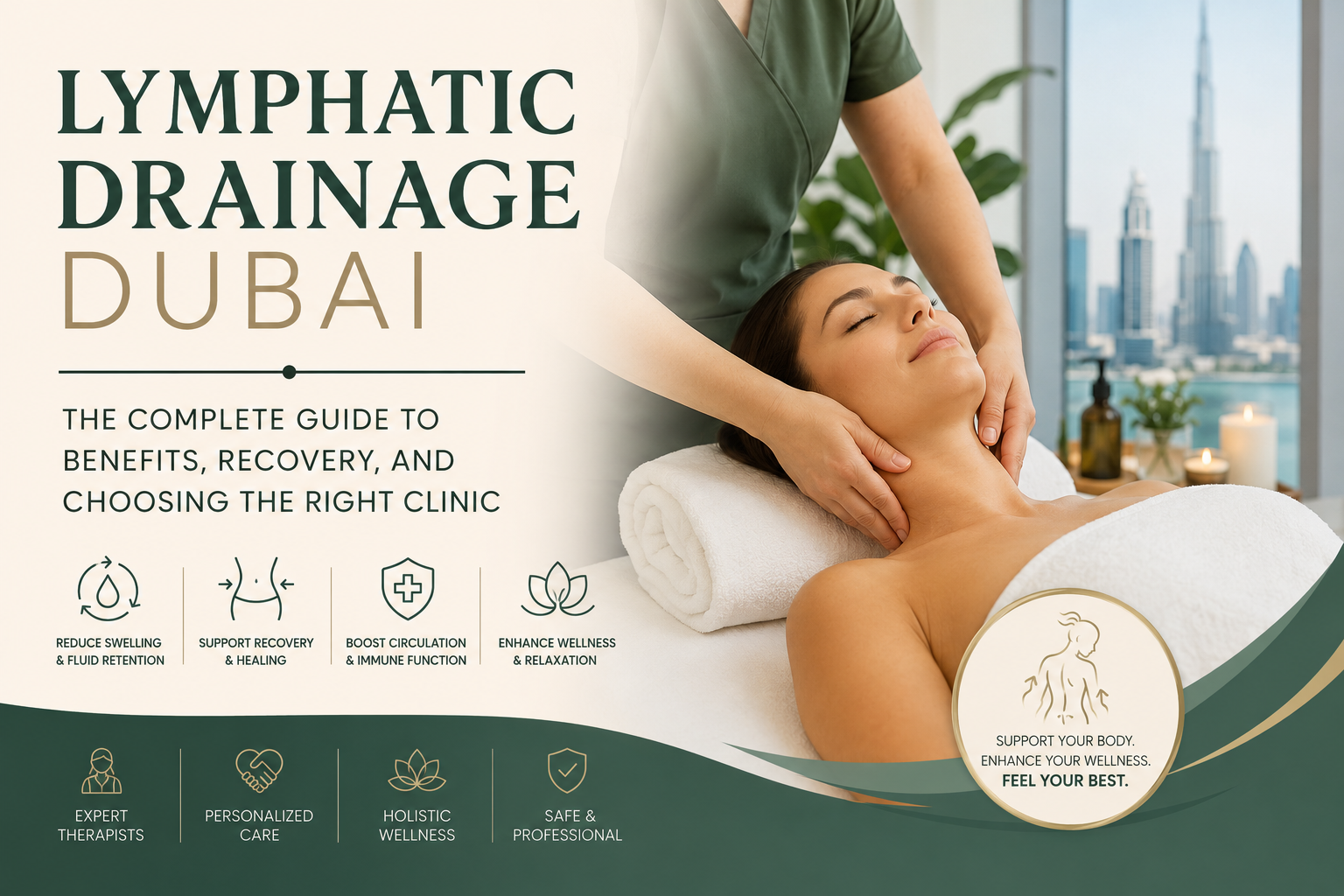
Lymphatic Drainage Dubai: The Complete Guide to Benefits, Recovery, and Choosing the Right Clinic
What Is Lymphatic Drainage?
Quick Answer: Lymphatic drainage is a gentle, rhythmic massage technique designed to encourage the natural movement of lymph fluid through the body, reducing swelling and supporting the body's own drainage pathways. It uses light pressure much lighter than a deep-tissue massage because the lymphatic vessels sit just under the skin.
Lymphatic drainage massage, sometimes called manual lymphatic drainage (MLD), is a specialized technique that uses light, rhythmic strokes to move lymph fluid toward the lymph nodes, where it can be filtered and returned to the bloodstream. Unlike a deep-tissue or sports massage, it doesn't rely on pressure or muscle manipulation. The strokes are slow, precise, and follow the direction of lymphatic flow.
There's an important distinction between a wellness lymphatic massage and a medical lymphatic treatment. A wellness session, offered by trained massage therapists, focuses on relaxation, general fluid balance, and comfort. A medical lymphatic treatment often prescribed for conditions like lymphedema is performed or supervised by a certified lymphedema therapist, sometimes alongside compression therapy and physical therapy, and is coordinated with a physician.
Lymphatic drainage in a wellness setting is typically performed by a certified massage therapist with specific manual lymphatic drainage training, not a general spa therapist. This distinction matters more than most people realize, because incorrect technique can be ineffective or, in rare cases, uncomfortable.
Understanding the Lymphatic System
Quick Answer: The lymphatic system is a network of vessels and nodes that runs parallel to your circulatory system, moving a fluid called lymph through the body to remove waste, excess fluid, and support immune function. Unlike blood, lymph has no central pump it relies on muscle movement, breathing, and external stimulation (like massage) to keep flowing.
Think of your circulatory system as having a pump the heart pushing blood through the body on a schedule. The lymphatic system doesn't have that luxury. It's a passive network, relying on muscle contractions, deep breathing, and gravity to move lymph fluid through hundreds of lymph nodes scattered across the neck, armpits, groin, and abdomen.
Why does this matter for circulation? Lymph fluid carries away metabolic waste, excess proteins, and fluid that leaks out of blood vessels into surrounding tissue. When this system slows down because of a sedentary job, air travel, surgery, or hormonal changes fluid can build up in the tissue, causing that heavy, puffy feeling many people describe.
The lymphatic system is also a core part of immune function. Lymph nodes filter out bacteria, viruses, and abnormal cells before returning clean fluid to circulation. This is why lymph nodes swell when you're fighting an infection they're doing their job.
Fluid balance in the body is a two-way street between the circulatory and lymphatic systems. When one slows down, the other often shows the strain, which is part of why swelling in the legs, face, or arms can become a visible signal that lymphatic flow needs support.
Benefits of Lymphatic Drainage Massage
Quick Answer: The most well-supported benefits of lymphatic drainage include reduced swelling, relief from fluid retention, support during post-surgery recovery, relaxation, and improved circulation. It's a supportive treatment, not a cure, and results vary by individual.
Lymphatic drainage massage is often recommended for:
- Swelling reduction encouraging fluid that has pooled in tissue to move back into circulation
- Fluid retention relief particularly helpful after long flights, salty meals, or hormonal fluctuations
- Post-surgery recovery support commonly recommended by surgeons following liposuction, tummy tucks, and other cosmetic procedures
- Relaxation and stress reduction the slow, rhythmic strokes activate the parasympathetic nervous system
- General wellness support many clients describe feeling "lighter" after a session
- Body contouring support reducing post-surgical swelling can help reveal results sooner (this is different from fat loss, covered below)
- Circulation support encouraging fluid movement throughout soft tissue
- Mobility reduced swelling around joints can make movement more comfortable
- Recovery often paired with rest and hydration protocols after intense training or travel
- Immune support by supporting healthy lymph flow, without claiming to prevent or treat illness
It's worth being direct here: lymphatic drainage is a supportive therapy. It is not a weight-loss treatment, it does not dissolve fat, and it is not a substitute for medical care. Reputable providers will always be upfront about this.
Why Dubai Residents Choose Lymphatic Drainage
Quick Answer: Dubai's climate, travel-heavy lifestyle, long office hours, and large cosmetic surgery and wellness industry create ideal conditions for fluid retention and swelling which is why lymphatic drainage has become a regular part of many residents' wellness routines rather than an occasional treat.
A few Dubai-specific factors show up again and again in client conversations:
- Climate. The heat encourages fluid retention, and the near-constant air conditioning many residents live and work in can affect circulation over long stretches of the day.
- Travel. Dubai is a global travel hub. Frequent flyers and long-haul commuters are especially prone to leg and ankle swelling from prolonged sitting and cabin pressure changes.
- Long office hours. Desk-based jobs with limited movement slow lymphatic flow, particularly in the lower legs.
- Fitness culture. Dubai's active gym and training culture means many residents are managing muscle recovery alongside everyday fatigue.
- Cosmetic procedures. Dubai has one of the region's largest cosmetic surgery markets, and post-operative lymphatic massage is frequently recommended as part of recovery protocols.
- Luxury wellness industry. A mature spa and wellness sector has made professional-grade treatments more accessible and normalized as part of routine self-care.
- Lifestyle. Between social schedules, business travel, and a fast pace of life, many residents are looking for treatments that offer genuine physical benefit, not just relaxation.
Who Can Benefit?
Quick Answer: Lymphatic drainage massage can benefit a wide range of people from post-surgery patients to frequent travelers but the right approach depends on the individual's situation, health history, and goals.
Post-surgery patients. Especially those recovering from liposuction, tummy tucks, or other procedures where surgeons commonly recommend lymphatic support to manage swelling.
Individuals with fluid retention. Whether from hormonal changes, diet, or prolonged sitting, many people experience visible puffiness that responds well to consistent sessions.
Office professionals. Long hours at a desk reduce natural muscle-pump activity that normally supports lymph flow.
Frequent travelers. Cabin pressure and prolonged immobility during flights are a common trigger for leg and ankle swelling.
Athletes and gym members. Many use lymphatic drainage as part of a recovery routine alongside stretching and hydration.
Wellness enthusiasts. People simply looking to support circulation and relaxation as part of a broader self-care routine.
Individuals interested in detox massage. While "detox" is often overused in marketing, the underlying mechanism supporting the body's natural waste clearance is a legitimate reason people seek this treatment.
Clients seeking body contouring support. Those who have had a body contouring procedure and want to support the recovery process, with realistic expectations about what massage can and cannot do.
Signs You May Benefit
Consider a session if you regularly notice:
- Puffiness in the face, hands, or ankles by the end of the day
- Legs that feel heavy after sitting or standing for long periods
- Visible swelling after flights
- Tightness or swelling following a cosmetic procedure (with medical clearance)
- Rings or shoes fitting tighter later in the day
- A general feeling of sluggishness or fluid buildup
- Skin that feels tight or slightly indented after pressure (a sign worth mentioning to a doctor if persistent)
Conditions That May Benefit
Quick Answer: Lymphatic drainage may support recovery from certain conditions, including post-surgical swelling and mild fluid retention, but it does not replace medical treatment and should be used alongside not instead of professional medical care when a condition is diagnosed.
Conditions where lymphatic massage is sometimes used as a supportive therapy include post-operative swelling, general fluid retention, and under close medical supervision lymphedema management. It's important to state clearly: this massage supports recovery, it does not replace medical treatment. Anyone with a diagnosed medical condition should get clearance from their physician before booking, and should treat their doctor's guidance as the primary source of care.
What Happens During Your First Appointment?
Quick Answer: A first appointment typically starts with a consultation about your health history and goals, followed by a gentle, full-body or targeted session using light rhythmic strokes, and ends with aftercare guidance. Most sessions last 45–75 minutes.
- Consultation. Your therapist asks about your medical history, any recent surgeries, medications, and specific concerns (swelling location, travel schedule, etc.).
- Goal setting. Whether you're there for post-surgery recovery, general wellness, or travel-related swelling, the approach is tailored accordingly.
- The session. You'll lie comfortably while the therapist uses slow, light, rhythmic strokes, generally starting near the neck and working toward the affected areas, in the direction that supports natural lymph flow.
- Communication. Because the pressure is much lighter than a typical massage, therapists usually check in to make sure the pressure feels right this should never feel painful.
- Aftercare guidance. You'll be given practical advice on hydration, movement, and follow-up timing before you leave.
Types of Lymphatic Drainage
Quick Answer: The four main types are manual lymphatic drainage (the foundational technique), post-operative lymphatic massage (tailored to surgical recovery), wellness lymphatic massage (general relaxation and fluid support), and body sculpting massage (post-procedure contouring support). Each serves a different purpose and audience.
| Type | Primary Purpose | Typical Client | Pressure Level | Session Length |
|---|---|---|---|---|
| Manual Lymphatic Drainage (MLD) | Foundational technique to encourage lymph flow | General wellness, mild swelling | Very light | 45–60 min |
| Post-Operative Lymphatic Massage | Manage swelling and support healing after surgery | Post-cosmetic surgery patients | Light, targeted | 45–75 min |
| Wellness Lymphatic Massage | Relaxation, circulation, general fluid balance | Travelers, office workers, wellness clients | Light | 45–60 min |
| Body Sculpting Massage | Supports the visible results of a contouring procedure | Post-liposuction post-tummy tuck clients | Light to moderate, technique-dependent | 60–75 min |
Post-Surgery Recovery
Quick Answer: Surgeons often recommend lymphatic drainage after cosmetic procedures because it can help manage post-operative swelling, though the exact timeline and number of sessions should always be guided by the surgeon's specific instructions.
Why surgeons recommend it. Surgical trauma disrupts local lymphatic vessels, which can cause more pronounced swelling and fluid buildup than the body would typically experience. Gentle manual drainage is often recommended to support the body's natural recovery process.
Expected timeline. Many surgeons suggest beginning sessions a few days after surgery, once cleared, with a series of sessions over the following weeks the exact schedule varies by procedure and surgeon.
Precautions. Always get explicit clearance from your surgeon before your first post-operative session. Share your surgery date, procedure type, and any complications with your therapist beforehand.
Benefits. Clients often report reduced tightness, more comfortable movement, and a smoother recovery experience, though individual results vary and should be discussed with your medical team.
Body Contouring Support
Quick Answer: Lymphatic drainage can support the visible recovery process after a body contouring procedure by helping manage post-surgical swelling, but it does not cause fat loss and should never be marketed or expected as a fat-reduction treatment on its own.
It's worth being very clear about this one: lymphatic drainage massage does not melt fat, break down cellulite permanently, or replace the results of a surgical procedure. What it can do is support the body's own swelling-reduction process after a procedure, which may help results become visible sooner and support overall comfort during recovery. Realistic expectations matter anyone promising dramatic fat-loss results from massage alone is overstating what this treatment does.
Wellness Benefits
Quick Answer: Beyond physical recovery, many clients return for lymphatic drainage simply because of how it makes them feel relaxed, lighter, and less fatigued, thanks to its gentle activation of the nervous system's rest-and-recover response.
The slow, rhythmic nature of the massage tends to have a calming effect similar to other gentle bodywork. Clients frequently describe better sleep on the night following a session, reduced tension, and a general sense of lightness. While these effects are subjective, the value of a treatment that supports both physical and mental wellbeing is part of why lymphatic drainage has become a recurring part of many people's routines, rather than a one-off treatment.
Preparing for Treatment
Checklist before your appointment:
- Drink water in the hours before your session
- Avoid a heavy meal immediately beforehand
- Wear or bring loose, comfortable clothing
- Share your full medical history, including medications and recent procedures
- Bring surgeon's clearance documentation if you're post-op
- Avoid alcohol on the day of treatment
- Arrive a few minutes early to complete any consultation forms
Aftercare Guide
Quick Answer: Good aftercare hydration, gentle movement, light nutrition, and rest helps extend the benefits of a lymphatic drainage session and supports your body's natural fluid balance in the days that follow.
- Hydration. Drink water consistently for the rest of the day; lymph fluid is largely water-based.
- Movement. Gentle walking supports natural lymph flow far better than sitting still.
- Nutrition. Lighter, lower-sodium meals on the day of treatment can help avoid additional fluid retention.
- Rest. Avoid intense exercise immediately after a session; give your body time to respond.
- Follow-up sessions. Consistency matters more than intensity your therapist can advise on a realistic schedule based on your goals.
Risks and Contraindications
Quick Answer: Lymphatic drainage is generally considered low-risk when performed by a trained therapist, but it is not appropriate for everyone. Certain conditions including active infections, blood clots, some heart conditions, and specific cancer-related situations require medical clearance before treatment, and pregnancy requires a specialized approach.
- Pregnancy considerations. Lymphatic drainage during pregnancy should only be performed by a therapist specifically trained in prenatal techniques, and always with medical clearance.
- Infections. Active infections, including cellulitis, are a reason to postpone treatment until cleared by a doctor.
- Blood clots. Anyone with a history of deep vein thrombosis or a current suspected clot should avoid massage in the area and seek medical attention.
- Heart conditions. Congestive heart failure and certain other cardiac conditions require physician guidance, as moving additional fluid into circulation can be a concern.
- Cancer considerations. Clients with a current or recent cancer diagnosis should work only with a therapist experienced in oncology massage, and only with their oncologist's approval.
- Medical clearance. When in doubt, the answer is always to check with a physician first. A responsible clinic will ask about these factors before treating you, not after.
Common Myths vs Facts
| Myth | Fact |
|---|---|
| Lymphatic drainage melts fat | It supports fluid movement, not fat breakdown |
| It requires deep, painful pressure | Effective technique uses very light pressure |
| It's only for post-surgery patients | It's also used for general wellness, travel swelling, and fatigue |
| One session gives permanent results | Consistency over time produces more noticeable, lasting effects |
| It's the same as a regular massage | It's a distinct technique targeting the lymphatic system specifically |
| Anyone can perform it safely | Training in manual lymphatic drainage technique matters significantly |
| It cures lymphedema | It supports management, not a cure, and should be medically supervised |
| It's not backed by any health organizations | Institutions like the NHS and Cleveland Clinic recognize MLD as a supportive therapy in specific contexts |
| Drinking water afterward doesn't matter | Hydration directly supports the fluid movement the massage encourages |
| It works the same for everyone | Individual results vary based on health, lifestyle, and consistency |
Common Mistakes to Avoid When Choosing a Lymphatic Drainage Clinic in Dubai
Quick Answer: The most common mistakes people make are choosing a clinic based on price alone, skipping the consultation step, assuming any massage therapist can perform proper manual lymphatic drainage, and not disclosing recent surgery or health conditions before booking.
- Choosing based on price alone. Manual lymphatic drainage is a skill-dependent technique the cheapest option is sometimes cheap because the therapist lacks specific MLD training.
- Skipping the consultation. A rushed intake process is a red flag. A proper consultation should always precede the first session.
- Assuming general massage experience is enough. Deep-tissue or sports massage training doesn't automatically include lymphatic drainage technique ask directly about certification.
- Not disclosing medical history. Withholding information about recent surgery, medication, or health conditions can affect both safety and results.
- Booking post-op sessions without surgeon clearance. Always confirm your surgeon has approved the timing before your first post-operative session.
- Expecting a single session to solve everything. Realistic results come from a consistent plan, not a one-time visit.
- Ignoring the environment. Hygiene standards and a calm, professional setting matter for both comfort and safety.
How Many Sessions Will I Need?
Quick Answer: There's no universal number session frequency depends on your goal, whether you're recovering from surgery, and how your body responds, but many clients start with a short series of closely spaced sessions before moving to a lighter maintenance schedule.
Several factors influence how many sessions are typically recommended:
- Your goal. General wellness maintenance usually needs far fewer sessions than post-surgical recovery.
- Post-surgery timelines. Surgeons often outline a specific sequence of sessions in the weeks following a procedure this schedule should take priority over generic recommendations.
- How your body responds. Some people notice a difference after one session; others need a consistent series before seeing meaningful change.
- Lifestyle factors. Travel frequency, activity levels, and diet can all influence how often ongoing sessions are useful.
A good therapist will avoid guaranteeing a fixed number of sessions upfront and instead reassess your progress along the way. Be cautious of any clinic that pushes a large, non-refundable package before your first consultation.
Choosing the Best Lymphatic Drainage Clinic in Dubai
Quick Answer: Look for a clinic with certified, specifically trained therapists, a clean and professional environment, a genuine consultation process, personalized treatment plans, and transparent communication about what the treatment can and can't do.
- Experience. How long has the therapist been practicing manual lymphatic drainage specifically, not massage in general?
- Certification. Ask directly about MLD-specific training and credentials.
- Clean environment. A professional, hygienic setting is non-negotiable.
- Personalized care. Your treatment plan should reflect your specific history and goals, not a one-size-fits-all package.
- Consultation. A real consultation not a quick form should happen before your first session.
- Reviews. Look for detailed, specific reviews rather than generic five-star ratings.
- Treatment plans. A trustworthy clinic will explain realistic timelines rather than promising fast, dramatic results.
Why Professional Therapists Matter
Quick Answer: Manual lymphatic drainage is a precise technique incorrect pressure, direction, or sequencing can reduce its effectiveness or, in some cases, cause discomfort, which is why therapist training matters more here than in many other massage styles.
Because the lymphatic vessels sit just beneath the skin, the direction and rhythm of each stroke matters. A therapist trained specifically in manual lymphatic drainage understands the sequence needed to move fluid toward functioning lymph nodes rather than away from them. This is fundamentally different from general massage training, which focuses on muscle tissue rather than the superficial lymphatic network. Choosing a therapist with dedicated MLD training is one of the clearest ways to ensure both safety and effectiveness.
Why Choose Lymph & Flow
At Lymph & Flow, sessions are built around experienced therapists trained specifically in manual lymphatic drainage technique, not general massage adapted on the spot. Every client starts with a proper consultation, so treatment plans reflect individual health history and goals rather than a standard package. The environment is designed for comfort and privacy, and the approach throughout stays evidence-informed realistic about what lymphatic drainage can support, and honest about when a concern should be directed to a physician instead. If you're exploring lymphatic drainage massage, recovering with support from a post-operative recovery plan, or looking into body sculpting massage after a procedure, the team can walk you through what a personalized plan looks like. You can also learn more about the practice or get in touch directly to ask questions before booking.
Frequently Asked Questions
1. What is lymphatic drainage massage? Lymphatic drainage massage is a gentle, rhythmic technique that encourages the movement of lymph fluid through the body, supporting reduced swelling and fluid balance. It uses much lighter pressure than a typical massage and is performed by therapists trained specifically in the technique.
2. Is lymphatic drainage worth it in Dubai? Many residents find it worthwhile given Dubai's climate, travel-heavy lifestyle, and desk-based work culture, all of which contribute to fluid retention. Value depends on individual goals it's best viewed as a supportive wellness or recovery tool rather than a one-time fix.
3. How much does lymphatic drainage cost in Dubai? Pricing varies by clinic, therapist experience, session length, and whether it's a wellness or post-operative session. It's best to contact a clinic directly for current pricing, since rates differ significantly across the city.
4. Can tourists book lymphatic drainage massage in Dubai? Yes, most clinics welcome visitors, and many tourists book sessions to relieve swelling from long-haul flights or to support recovery after a cosmetic procedure performed abroad.
5. Does lymphatic drainage hurt? No. Proper manual lymphatic drainage uses light, gentle pressure. If a session feels painful, the pressure is likely too heavy or the technique isn't being applied correctly.
6. How soon after surgery can I get lymphatic drainage? This depends entirely on your surgeon's guidance. Many surgeons clear patients for sessions within the first week or two, but you should always get explicit approval before booking.
7. Can lymphatic drainage help with cellulite? It may temporarily improve the appearance of the skin by reducing fluid retention, but it does not eliminate cellulite, which is primarily a structural and fat-related characteristic of the skin.
8. How often should I get lymphatic drainage massage? Frequency depends on your goals. Post-surgical recovery often involves a closely spaced series of sessions, while general wellness maintenance might mean occasional sessions spaced further apart.
9. Is lymphatic drainage the same as a regular massage? No. It uses a distinct technique targeting the superficial lymphatic system with light, directional strokes, rather than the deeper muscle-focused pressure used in typical massage.
10. Can lymphatic drainage help with swelling after a flight? Yes, many clients book sessions specifically to relieve leg and ankle swelling caused by long flights and prolonged immobility.
11. Is lymphatic drainage safe during pregnancy? It can be, but only when performed by a therapist specifically trained in prenatal lymphatic drainage and with medical clearance from your doctor.
12. What should I wear to a lymphatic drainage session? Loose, comfortable clothing is recommended. Many clinics provide a robe or draping for the treatment itself, similar to other massage services.
13. Can lymphatic drainage help reduce fat? No. It supports fluid movement, not fat breakdown. Any clinic claiming guaranteed fat loss from massage alone is overstating the treatment's actual effect.
14. How long does a lymphatic drainage session take? Most sessions last between 45 and 75 minutes, depending on whether it's a general wellness session or a more targeted post-operative treatment.
15. Who should avoid lymphatic drainage? People with active infections, certain heart conditions, a history of blood clots, or specific cancer-related concerns should get medical clearance before booking. Always disclose your full health history beforehand.
16. Does lymphatic drainage boost the immune system? It supports the lymphatic system, which plays a role in immune function, but it does not prevent or treat illness and shouldn't be marketed as an immune "boost."
17. What's the difference between manual lymphatic drainage and body sculpting massage? Manual lymphatic drainage is the foundational technique focused on fluid movement, while body sculpting massage is typically used post-procedure to support visible recovery and comfort, often building on the same underlying technique.
18. Can I combine lymphatic drainage with other treatments? Often, yes but always check with your therapist and, if relevant, your surgeon or physician, especially if you're combining it with other post-operative or medical treatments.
19. Will I see results after one session? Some people notice a difference in swelling right after a session, but lasting results typically come from a consistent series of sessions rather than a single visit.
20. How do I know if a clinic's therapists are properly trained? Ask directly about specific manual lymphatic drainage certification, not just general massage therapy credentials. A reputable clinic will answer this clearly and confidently.
Final Thoughts
Lymphatic drainage isn't a miracle treatment, and any resource telling you otherwise isn't being straight with you. What it is, is a well-supported, gentle way to help your body do something it's already trying to do move fluid, reduce swelling, and support recovery a little more efficiently. For Dubai residents dealing with heat, travel, long office hours, or post-surgical recovery, that support can make a real difference in how you feel day to day.
The most important takeaways: choose a therapist specifically trained in manual lymphatic drainage, be upfront about your health history, get medical clearance when relevant, and think of this as a consistent, supportive practice rather than a one-time fix. If you'd like personalized guidance on what a treatment plan could look like for your situation, the team at Lymph & Flow is happy to walk you through it during a consultation.