
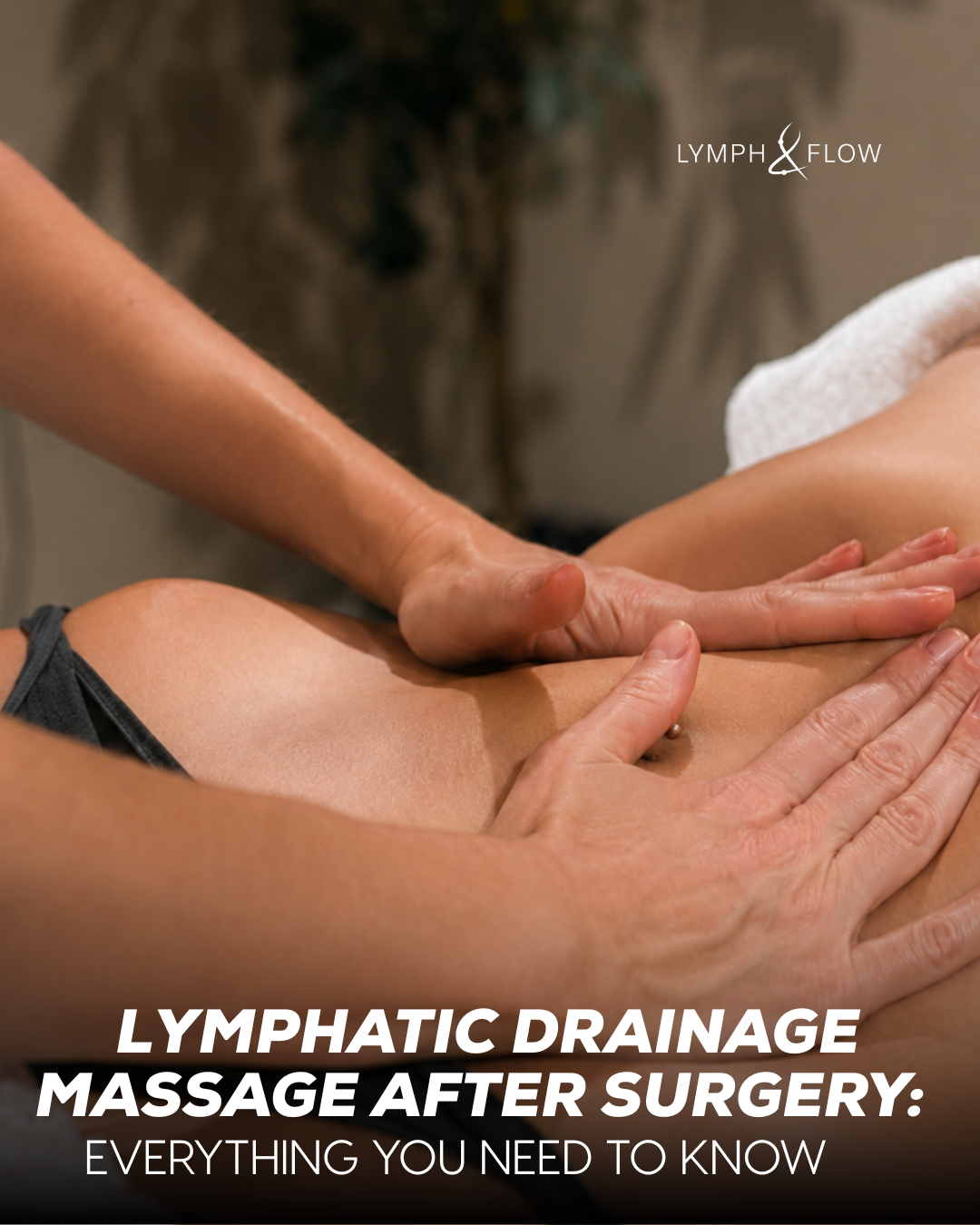
Lymphatic Drainage Massage After Surgery: Everything You Need to Know
Swelling after surgery is one of the most predictable and most frustrating parts of recovery. Whether you've had liposuction, a tummy tuck, a BBL, or orthopedic surgery, your body responds to surgical trauma by retaining fluid, slowing circulation, and triggering an inflammatory response that can leave you feeling tight, heavy, and uncomfortable for weeks.
This is where lymphatic drainage massage after surgery has become an essential part of modern post-operative care. Once considered a niche therapy, manual lymphatic drainage (MLD) is now widely recommended by plastic surgeons, physical therapists, and recovery specialists across Dubai, the United States, the United Kingdom, Canada, and Australia as a core component of post-surgical healing protocols.
This guide explains exactly what lymphatic drainage massage is, why it matters after surgery, when to start it, what results to realistically expect, and who should avoid it. The goal is simple: to give you a clear, trustworthy, and medically grounded understanding of this therapy so you can make informed decisions about your own recovery.
Quick Answer: Who Needs Lymphatic Drainage Massage After Surgery?
- Liposuction patients managing post-procedure swelling
- Tummy tuck (abdominoplasty) patients recovering from abdominal trauma
- BBL (Brazilian Butt Lift) patients needing fluid management without disrupting fat grafting
- Orthopedic surgery patients with joint or limb swelling
- Anyone experiencing fluid retention, tightness, or sluggish healing after a surgical procedure
Understanding the Lymphatic System After Surgery
The lymphatic system is a network of vessels and nodes that runs throughout your body, working alongside your circulatory system. Its main job is to collect excess fluid, proteins, and cellular waste from your tissues and return them to your bloodstream for filtering and elimination. It also plays a central role in immune function, helping your body fight infection and manage inflammation.
Surgery disrupts this system directly. Incisions cut through lymphatic vessels, and the surgical trauma itself triggers a localized inflammatory response. Your body sends extra fluid to the affected area as part of natural healing, but with damaged or temporarily blocked lymphatic pathways, that fluid has nowhere efficient to go. The result is the swelling, puffiness, and firmness that most surgical patients experience in the days and weeks following their procedure.
This isn't a sign that something has gone wrong — it's a normal physiological response. But left unmanaged, excess fluid buildup can prolong discomfort, increase the risk of complications like seroma (a pocket of trapped fluid), and slow down the overall timeline of visible healing.
What Is Lymphatic Drainage Massage After Surgery?
Lymphatic drainage massage, often called manual lymphatic drainage (MLD), is a gentle, rhythmic massage technique designed to stimulate the lymphatic system and encourage the movement of trapped fluid out of swollen tissue and toward functioning lymph nodes.
Unlike deep tissue massage, MLD uses very light pressure — often compared to the pressure you'd use to test if a peach is ripe. The technique follows specific directional patterns that mirror the body's natural lymphatic pathways, gently guiding fluid toward areas where the lymphatic system is still functioning normally.
From a medical wellness perspective, MLD is not about "working out" tight muscles. It's a precise, low-pressure technique aimed specifically at fluid mobilization, inflammation reduction, and supporting your body's own healing mechanisms during the post-operative window.
15 Key Benefits of Lymphatic Drainage Massage After Surgery
1. Reduces Post-Surgical Swelling
By encouraging excess fluid to move out of tissue and into the lymphatic system, MLD helps bring down visible swelling more efficiently than rest alone.
2. Improves Fluid Drainage
Gentle, directional strokes help reroute fluid around damaged lymphatic pathways toward healthy nodes, improving overall drainage efficiency.
3. Speeds Up Healing
Better circulation and reduced fluid stagnation create a more favorable environment for tissue repair.
4. Reduces Inflammation
Moving stagnant fluid and inflammatory byproducts away from the surgical site can help calm localized inflammation.
5. Prevents Fluid Buildup (Seroma)
Regular MLD sessions are often used specifically to reduce the risk of seroma formation, a common post-surgical complication.
6. Enhances Circulation
Improved lymphatic flow supports better overall blood and fluid circulation throughout the treated area.
7. Supports Immune Function
Since the lymphatic system is tied closely to immune response, keeping it functioning well may support your body's natural defense mechanisms during recovery.
8. Reduces Pain and Discomfort
Less fluid pressure on surrounding tissue often translates to reduced tightness-related discomfort.
9. Improves Scar Healing
Some practitioners use light MLD techniques near (not directly on) healing incisions to support softer, more even scar tissue development once cleared by a surgeon.
10. Minimizes Bruising
By helping clear pooled blood and fluid beneath the skin, MLD may contribute to faster fading of post-surgical bruising.
11. Increases Mobility
Reduced swelling and tightness often translate into easier, more comfortable movement during early recovery.
12. Supports Tissue Repair
A well-functioning lymphatic system delivers the conditions tissue needs to repair itself effectively.
13. Reduces Tightness
Patients often report a noticeable reduction in the "tight, stretched" sensation common after procedures like tummy tucks.
14. Enhances Recovery Speed
While individual results vary, many patients and clinicians report a smoother overall recovery trajectory with consistent MLD.
15. Improves Overall Comfort
Beyond the physical benefits, the gentle nature of MLD is often described as soothing — a welcome contrast to the discomfort of early recovery.
When Should You Start Lymphatic Drainage After Surgery?
Timing depends heavily on the type of surgery performed and your surgeon's specific protocol. As a general guideline:
- Liposuction and tummy tuck patients often begin MLD within the first one to two weeks post-surgery, once initial swelling has stabilized.
- BBL patients require special care, since pressure on the buttocks can affect fat graft survival. Timing and technique must be carefully coordinated with your surgeon.
- Orthopedic surgery patients typically follow a timeline set by their physical therapist, often once acute swelling has passed its peak.
The most important rule across all surgery types: never begin lymphatic drainage massage without direct approval from your surgeon. Starting too early, or applying it incorrectly, can interfere with healing tissue, disrupt sutures, or affect surgical results.
Who Needs It Most?
- Cosmetic surgery patients — particularly those recovering from liposuction, tummy tucks, and BBLs, where fluid retention is a common and expected part of recovery.
- Post-liposuction patients — who often experience significant fluid shifts in the days following the procedure.
- Post tummy tuck patients — due to the extensive tissue disruption involved in abdominoplasty.
- Post BBL patients — with careful, surgeon-approved technique to protect fat grafting results.
- Orthopedic patients — recovering from joint replacements or reconstructive procedures involving significant tissue trauma.
- Chronic swelling cases — including patients with a history of lymphedema or circulatory issues who may benefit from longer-term lymphatic support.
Scientific Perspective on Post-Surgery Lymphatic Drainage
Manual lymphatic drainage has a long clinical history, originally developed for managing lymphedema and now widely adopted in post-surgical and rehabilitation settings. Physical therapists, certified MLD practitioners, and plastic surgery recovery teams commonly incorporate it into structured post-operative care plans.
Clinical interest in MLD has grown alongside rising rates of cosmetic and reconstructive surgery, with many surgical practices now recommending it as a standard part of aftercare rather than an optional add-on. That said, research in this space continues to evolve. While clinical and patient-reported outcomes are generally positive — particularly around comfort, swelling reduction, and seroma prevention — practitioners are careful not to frame MLD as a guaranteed outcome or a substitute for medical care. It's best understood as a supportive therapy that works alongside, not instead of, standard post-operative medical guidance.
Is It Safe After Surgery?
When performed by a trained, certified lymphatic drainage therapist and approved by your surgeon, MLD is generally considered a safe and low-risk therapy. Its gentle pressure and non-invasive technique make it suitable for most post-surgical patients once initial healing milestones have been met.
Safety depends heavily on:
- Timing — starting at the right point in your specific recovery
- Technique — using light, correct pressure rather than deep tissue work
- Practitioner qualification — working with someone trained specifically in MLD, not general massage
- Surgeon coordination — keeping your surgical team informed and involved in the decision
This is not a therapy to source casually. A poorly trained practitioner using incorrect pressure or technique can do more harm than good during a sensitive healing window.
Who Should Avoid Lymphatic Drainage After Surgery?
Certain conditions make MLD inappropriate or require special medical clearance first, including:
- Active infections — MLD can potentially help spread infection through the lymphatic system if performed while one is present.
- Blood clot conditions — including deep vein thrombosis (DVT) or a history of clotting disorders, where massage could pose serious risk.
- Heart failure or significant cardiovascular conditions — since MLD increases fluid movement back into circulation, which can be problematic for compromised cardiac function.
- Unhealed or compromised incisions — direct work near open or unstable wounds should be avoided until properly healed.
- Any condition your surgeon specifically flags — your surgical team knows your individual case and any restrictions always take priority over general guidance.
If you have any of these conditions or concerns, speak with your surgeon before starting any lymphatic drainage therapy.
Expert Recovery Tips
- Hydration — Drinking adequate water supports lymphatic fluid movement and overall healing.
- Light movement — Gentle walking, as approved by your surgeon, helps stimulate natural lymphatic flow.
- Nutrition for healing — A diet rich in protein, anti-inflammatory foods, and reduced sodium can support fluid balance.
- Sleep optimization — Quality rest is when much of your body's repair work happens.
- Compression garments — Often used alongside MLD to support fluid management between sessions.
- Follow-up care — Regular check-ins with your surgeon ensure your recovery — and any therapy you're using to support it — stays on track.
Key Takeaways
- Lymphatic drainage massage supports swelling reduction, circulation, and comfort after surgery.
- It should only begin with surgeon approval and at the appropriate point in your specific recovery timeline.
- Working with a certified MLD therapist is essential for safety and effectiveness.
- Certain medical conditions — including infections, clotting disorders, and heart conditions — require caution or avoidance.
- MLD is a supportive therapy, not a replacement for medical care or your surgeon's instructions.
Conclusion
Post-surgical swelling is a normal, expected part of healing — but it doesn't have to be something you simply wait out. Lymphatic drainage massage after surgery offers a gentle, evidence-informed way to support your body's natural recovery processes, reduce discomfort, and potentially lower the risk of complications like seroma.
That said, this is a therapy that works best within a coordinated care plan. The safest and most effective path forward is always to start with your surgeon's guidance, choose a qualified, certified lymphatic drainage therapist, and treat MLD as one supportive piece of a broader, medically guided recovery.
Frequently Asked Questions
What is lymphatic drainage massage after surgery?
It's a gentle, specialized massage technique that stimulates the lymphatic system to move excess fluid out of swollen tissue, supporting reduced swelling and smoother post-surgical healing when approved by your surgeon.
Does it reduce swelling?
Yes, manual lymphatic drainage is widely used specifically to reduce post-surgical swelling by helping mobilize trapped fluid toward functioning lymph nodes for natural drainage.
When should I start it?
Timing depends on your procedure and surgeon's protocol, typically beginning once initial healing milestones are met. Always get direct approval from your surgeon before your first session.
Is it painful?
No. MLD uses very light pressure, often described as gentle and soothing rather than painful, though some sensitivity near the surgical area is normal in early recovery.
How many sessions do I need?
This varies by procedure and individual healing, but many patients have multiple sessions over two to six weeks, decreasing in frequency as swelling resolves.
Can it speed up healing?
It may support a smoother recovery by reducing fluid buildup and inflammation, though individual results vary and it should complement, not replace, standard medical care.
Is it safe after cosmetic surgery?
Yes, when performed by a certified therapist with surgeon approval and proper timing, it's considered a safe and commonly recommended part of cosmetic surgery aftercare.
Does it reduce bruising?
Many patients and practitioners report that MLD helps bruising fade faster by supporting the clearance of pooled blood and fluid beneath the skin.
Who should avoid it?
Patients with active infections, blood clots, certain heart conditions, or unhealed incisions should avoid MLD until cleared by their surgeon.
How long does swelling last after surgery?
Swelling timelines vary by procedure, but it often peaks in the first few days and gradually resolves over several weeks to a few months, with MLD potentially helping shorten this window.
Can it prevent complications?
MLD is often used specifically to help reduce the risk of seroma and other fluid-related complications, though it cannot guarantee complication-free recovery.
Is it medically recommended?
Many surgeons and physical therapists now include MLD as a standard recommendation in post-operative care plans, particularly after cosmetic and reconstructive procedures.
What results should I expect?
Most patients notice reduced tightness, less visible swelling, and improved comfort over a series of sessions, though results and timelines vary by individual and procedure.
Does it help scar healing?
Light lymphatic techniques applied near (not directly on) healing incisions, once cleared by a surgeon, may support softer scar tissue development over time.
Can I do it at home?
Some gentle self-massage techniques exist for maintenance between professional sessions, but initial post-surgical MLD should always be performed by a certified therapist.